The song Richard Kelly fought to put at the front of Donnie Darko is the one he now wants to take back out. Answering questions in a Reddit Q&A, Kelly said he is still thinking about a third cut of his 2001 debut, and that it would move Echo and the Bunnymen’s “The Killing Moon” back to the opening, where it sat 25 years ago only because he could not afford the alternative. “I am not satisfied with either version, honestly,” he wrote.
He put a condition on all of it. A third version “would lean closer to” the theatrical cut, Kelly wrote, “now that I have written the sequel novel.” The 2004 director’s cut, he said, “was meant to lay the groundwork for the much bigger universe explored in my sequel.” That universe now has somewhere else to live.
The Music Was the Part He Could Not Afford
The 113-minute theatrical version plays “The Killing Moon” over its opening sequence, before the jet engine comes through the roof of Donnie’s bedroom. Kelly had built that sequence around a different record. “The film was choreographed with INXS as the opening song,” he wrote, and the rights were out of reach on a first feature made for $4.5 million. By 2004 he could pay for them, so the director’s cut opens on “Never Tear Us Apart” and pushes “The Killing Moon” down to the party sequence, deep inside a version that runs about twenty minutes longer.
His fix is to stop choosing. “I plan to use Echo and the Bunnymen twice. At the opening,” Kelly wrote, “and then again at the party sequence (the way it is used in the DC.)” He also said he wanted the INXS version to exist for people regardless, “so I at least wanted people to have a version of the film with it there.”

His second instinct is the right one. “The Killing Moon” over those first few minutes is the better opening by a wide margin, and the INXS swap trades an omen for a mood. Kelly waited three years to afford the song he had always wanted, and the stronger film turned out to be the one money forced on him.
A Sequel Novel Changed the Math
The reason the logic flipped arrives on December 15. The Philosophy of Time Travel, Kelly’s own sequel novel, comes out from Range Literary Publishing and takes its title from Roberta Sparrow’s book inside the film. It picks up after Donnie’s death and follows his mother Rose Darko and her husband Eddie, written here as a CIA analyst, as they are pulled into an investigation assembled out of government transcripts, recordings and early email.
Kelly has been open that the book is a pitch. “This book starts off in the 14 months after Donnie’s death, and then there is much more narrative material that I’ve been developing where the time jumps 28 years into the future,” he told Variety in August, adding that “I want to reunite the original cast, and I want to take it onto a gigantic scale and that takes time and it has a price tag.”
That is what makes the third cut coherent rather than fussy. The director’s cut exists because Kelly needed the film to carry the mythology, so he put pages of Sparrow’s book on screen and let the running time absorb them. A novel does that job better than twenty minutes of inserts ever did, which frees the movie to go back to being the tight, unexplained thing people fell for on DVD.

Nothing Is Scheduled
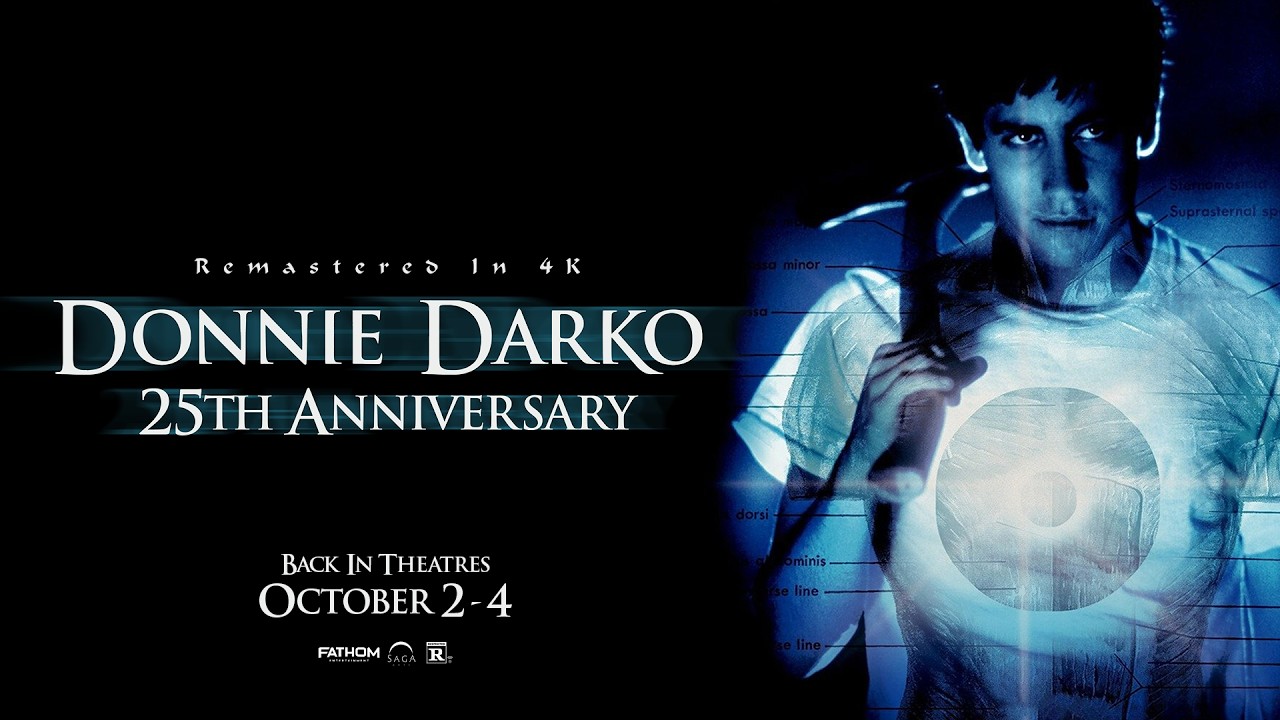
No third cut has been announced, and Kelly kept the whole thing conditional. The timing is still strange: he is talking about recutting the film during the three days it is back in theaters. The 4K restoration from Fathom Entertainment and Saga Arts has been playing since Donnie Darko Day on October 2 and closes tonight, and the announcement in September never said which of the two cuts audiences were buying tickets for.
A quarter of a century in, the film has outlasted two edits and 2009’s S. Darko, a sequel Kelly had no part in and has said he never watched. He is the only person still arguing with it, which is roughly the right relationship for a director to have with the best thing he ever made.