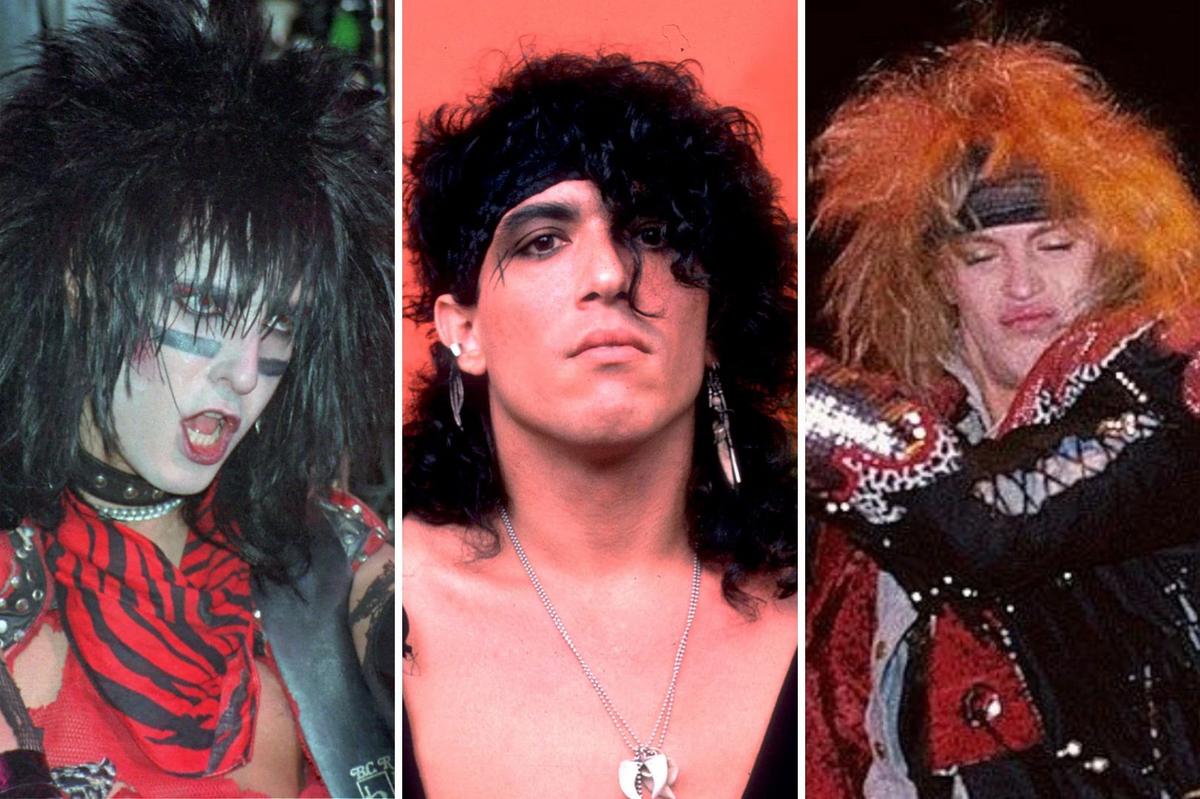

It’s no wonder so many hair metal bands recorded great cover songs in their heyday.
Many of the bands that exploded in popularity during the 1980s glam metal zeitgeist cut their teeth playing clubs in the late ’70s and early ’80s. Promoters often had two priorities back then: They needed bands that coulddraw a crowd and fill time.
You were unlikely to find a baby band with three to four hours of fine-tuned original music back then — and even if theydid have that much material, club owners didn’t want them to bore the crowd with it. So in lieu of playing unknown originals, these bands — in the spirit of Aerosmith, Van Halen and countless others before them — resorted to covers.
READ MORE: The Heaviest Song by 11 Big Hair Metal Bands
Some of thesesongs never made it off the club stage. But others became such well-worn parts of a band’s repertoire that they decided to record them.Some coverswere relegated toB-sides or outtakes; otherswere such surprisehitsthat they became a defining part of a band’s legacy (and unfortunately overshadowed their original compositions).
The latter scenario could present an understandably frustrating conundrum. Still, it’s hard to look a gift horse in the mouth when you’repacking arenas and selling millions of records —proof thatthese bands’ interpretive skills were justthat good.
Read on to see the best cover song by 11 big hair metal bands.
Cinderella, “Move Over” (1989)
Original artist: Janis Joplin (1971)
Why it works:Despite the ultra-glam cover of their debut albumNight Songs, Cinderella werealways more indebted to bluesy hard rock bandssuch as Aerosmith, Led Zeppelin and the Rolling Stones than their slick pop-metal contemporaries. So they were one of the few bands of the era that had a fighting chanceof paying proper homage to Janis Joplin.
Their cover of Joplin’s “Move Over” — released on 1989’sStairway to Heaven/Highway to Hellcharity compilation album alongside other bands that performed at that year’s Moscow Music Peace Festival —proved a perfect fit forfrontman Tom Keifer’s raspy howl, while the rootsy instrumentation hinted at the morestripped-downdirection Cinderella would take on 1990’sHeartbreak Station.
Great White, “Once Bitten, Twice Shy” (1989)
Original artist:Ian Hunter (1975)
Why it works:Great White frontman Jack Russellhad one of the most powerful anddistinctive voices of the hair metal era. He puts his pipes to good use on the band’s smash cover of “Once Bitten, Twice Shy,” whichis full of rock ‘n’ roll swagger, hip-swiveling grooves and a tasty solo courtesy of guitarist Mark Kendall.
Hunter’s original “Once Bitten, Twice Shy” reached No. 14 on the UK Singles chart but failed to chart in the U.S. Great White’s version soared to No. 5 on the Billboard Hot 100, giving them equal claim to the glam rock staple.
Hanoi Rocks, “Up Around the Bend” (1984)
Original artist:Creedence Clearwater Revival (1970)
Why it works:Although not explicitly a hair metal band, Helsinki, Finland’s Hanoi Rockshelped shape the aesthetic of the entire Sunset Strip glam metal scenebefore preparing to vault to the big leagues themselves with 1984’sTwo Steps From the Move.The band’s unique blend of glam, punk and hard rock shines throughout the LP, which brazenly opens with a cover of CCR’s “Up Around the Bend.”
It’s a nervy, energetic performance anchored by Michael Monroe’s charismatic vocals and Andy McCoy’s razor-sharp lead guitar. Had their drummer Razzle not been killed in a drunk driving accidentwith Motley Crue’s Vince Neil behind the wheel, there’s no telling how high Hanoi Rocks could have flown.
Motley Crue, “Helter Skelter” (1983)
Original artist:The Beatles (1968)
Why it works: All due respect to their Top 20takeon Brownsville Station’s “Smokin’ in the Boys Room,” but Motley Crue’s “Helter Skelter” stands head and shoulders above the rest of their covers.
Whilethe original was a proto-metal behemoth, Motley’s Shout at the Devilversion is a raw punk-metal slammer. The band is in peak form,from Mick Mars’ tough-as-nails riffs and Tommy Lee’s gigantic groovesto Vince Neil’s piercing vocals. The glam metal pioneers managed to maintain the heaviness and the hooks of the original “Helter Skelter” while putting their own spin on the Fab Four classic.
Poison, “Your Mama Don’t Dance” (1988)
Original artist:Loggins and Messina (1972)
Why it works:The original “Your Mama Don’t Dance” was already hokey (complimentary). So who better to cover it than Poison, the quintessential kings of glam metal camp?
The Mechanicsburg, Pennsylvania natives maintain the good-time strut of the original while adding some extra guitar crunch and sizzling solos. Bret Michaels hams it up with the spoken-word interlude, lest anybody accuse Poison of taking themselves too seriously. The cover paid off, and “Your Mama Don’t Dance” becamePoison’s fourth consecutive Top 20 hit offOpen Up and Say … Ahh!
Quiet Riot, “Cum On Feel the Noize” (1983)
Original artist:Slade (1973)
Why it works: Producer Spencer Proffer wascertain that if he could find a band to credibly cover Slade’s “Cum On Feel the Noize,” he could get CBS Records to take him more seriously. He convinced down-on-their-luck rockers Quiet Riot to cut the song by offering to record three of their owntunes in exchange.
The band neglected to practice the song before hitting the studio, intending to sabotage their own performance so Proffer would give up and move on to their originals. Buteven withtheir lack of preparation, Quiet Riotgot such a killer take that they couldn’t deny its potential.
Indeed, “Cum On Feel the Noize” rose to No. 5 on the Hot 100 when it was released as the lead single offMetal Health, whichkicked off the glam metal zeitgeist in earnest when it becamethe first heavy metal album to top the charts.
Ratt, “Walkin’ the Dog” (1983)
Original artist:Rufus Thomas (1963)
Why it works: Rufus Thomas’ R&B classic hadalready been covered by the Rolling Stones, Aerosmith, Roger Daltrey and several other artists by the time Ratt got their hands on it.
The resulting cover, which appeared onthe band’s self-titled debut EP in 1983,is almost completely devoid of the funk and soul elements of the original. Instead, it boasts Ratt’s signature streetwise thrust, bolstered by Stephen Pearcy’s punky snarl and the fiery twin-guitar attack of Warren DeMartini and Robbin Crosby.
Skid Row, “Little Wing” (1992)
Original artist:The Jimi Hendrix Experience (1967)
Why it works:Skid Row’s self-titled debut and pulverizing sophomore album Slave to the Grind proved they had the power to level buildings with their razor-sharp riffs and Sebastian Bach’smulti-octavevoice. But on “Little Wing,” the Jimi Hendrix cover that concludes their 1992B-Side OurselvesEP, they showed they could be equally captivating at low volume.
Bachreinterprets Hendrix’s haunting ballad with his tender vibrato and well-placed power notes, while Scotti Hill does the late guitar god proud with an aching solo. Skid Row’s fortuneswould soon take a turn, but on”Little Wing” they sound stronger than ever.
Tesla, “Little Suzi” (1986)
Original artist:Ph.D. (1981)
Why it works:We’re willing to bet not manyglam metal fans even know Tesla’s “Little Suzi” is a cover of new wave band PH.D.’s “Little Susie’s on the Up.” That’s a credit to the band, who sothoroughly transformed the track into a rootsy hard rock anthem for their debut album, Mechanical Resonance,that it sounds wholly their own.
Tesla’s “Little Suzi”keeps all the bones of the original: simple chord progressions, catchy vocal melodies and soaring, anthemic choruses. Butthe jangly guitars and Jeff Keith’sraspy vocals helpedestablish the blue-collar glam metal template that would set Tesla apart from their peers. It also foreshadowed their Top 10 cover ofFive Man Electrical Band’s “Signs,” which appeared on their cheekily titled 1990 live albumFive Man Acoustical Jam.
W.A.S.P., “The Real Me” (1989)
Original artist:The Who (1973)
Why it works: Released as the second single off 1989’sThe Headless Children,W.A.S.P.’s cover of the Who’s “The Real Me” boasts the splashy production characteristic of the era’s biggest bands. Butit’s also got rip-roaringperformances from drummer Frankie Banali, bassist Johnny Rod and lead singer Blackie Lawless.
The Headless Childrenshowcased a newfound maturity and depth of songwriting from W.A.S.P., who were notorious for their grisly onstage antics and lascivious lyrics. With “The Real Me,”they made a concerted — and successful — effort to associate themselves with classic rock’s elite.
Warrant, “Train Train” (1990)
Original artist:Blackfoot (1979)
Why it works: The cruel irony of Warrant’sCherry Pie is that, boneheaded title track aside, the album is full ofdamn good rockers andheartstring-tugging ballads thatasserted Jani Lane’s incredible songwritingabilities and the band’s musical chops.
Their cover of Blackfoot’s “Train Train”fallsinto the former category.The chugging riffs and bluesy harmonica solo maintain the Southern rock stomp of the original, while a fiery guitar solo and Lane’s falsetto screams usher the track into the glam era.
Want more hair metal? Check out our list of the best hair metal band for each letter of the alphabet:
The Best Hair Metal Band for Each Letter of the Alphabet
Some of these letters had stiff competition! Others … not so much.
Gallery Credit: Bryan Rolli














.png?mbid=social_retweet "Westside Gunn Announces New Album Heelmatic")