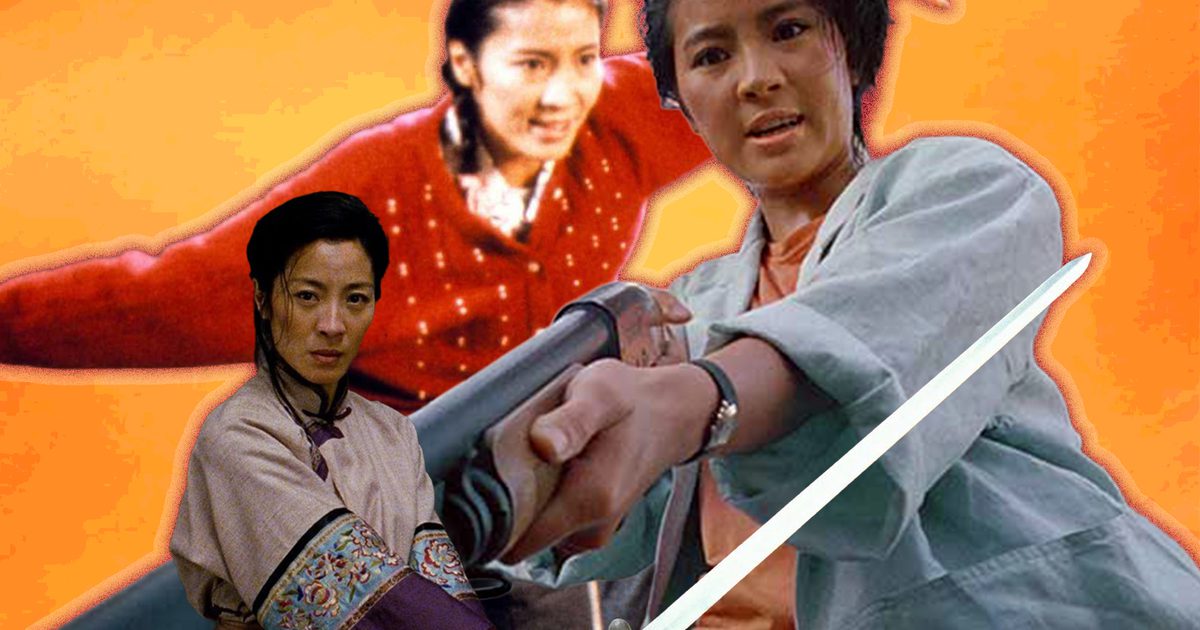

A spiritual summation of Yeoh’s career until that point,The Stunt Womansets out to explore alandscape of rampant risk, but doesn’t go very far. Wide-eyed and ambitious yet playful and sensitive, Yeoh’s eponymous character Ah Kam hustles her way into astunt unit, led by Master Tung (Sammo Hung, astalwart action filmmaker himself). She becomes emotionally enmeshed with the crew despite various threats to life and limb; in addition to their everyday foolhardy feats, the film industry’s connections to the criminal underworld blow up in their faces during apoolhouse brawl with machetes. It breaks out when Tung is hit from behind; touching his back and finding blood, he shouts “this time it’s real!” in aclose-quarters fight that’s ugly and unglamorous. Hui intercuts close-up shots of digital fighters from the arcade machines squinting out at this clumsy skirmish, asuggestive flourish that sticks out in alargely flat, dispassionate film. The juxtaposition briefly punctures the illusion of so-called “heroic bloodshed”. It’s the closest we get to areal critique.
The fateful stunt on the freeway, which made Yeoh reassess her career, was mirrored in the film itself. Ah Kam is pressured by Tung to perform the very same leap from the overpass, but, thrown off her game by arecent romantic betrayal, she hesitates. Still visibly nervous on the second try, he pushes her over the edge. The fear of falling now overcome, they reset, and on the third take, she dives dutifully and gracefully. As with other scenes in the film, peril and angst are present, but they are quickly brushed aside. From there, the crime plot pushesThe Stunt Woman toward melodrama and easy catharsis, with only Yeoh – dramatic chops by now greatly matured – to anchor us.
After her recovery, she donned amore adaptable persona in 1997, starting with aBond girl stint inTomorrow Never Dies. Despite Yeoh’s protests, director Roger Spottiswoode did not allow her to perform her own stunts. More transnational prestige came with the blockbuster Taiwan-HK-China-USA co-productionCrouching Tiger Hidden Dragonin 2000, which was the last true marriage of her actorly poise with her martial art mastery.
After 20years of low-wattage, high-return supporting parts in Hollywood, Yeoh had been pigeonholed by the machine, her distinctive facets sanded down. Had her Oscar-winning role inEverything Everywhere All at Oncegone to Jackie Chan (as originally intended by Daniels Kwan and Schienert), western audiences might have had avery different notion of the Malaysian performer’s talents. Shot from the waist up in medium shots, Yeoh, who performs with the farthest reaches of her body, is acompletely different actor. Given the physical tolls of her most immediate form of physical expression, however, it’s understandable that she would disappear into comfort. She’s earned it.










.jpg?mbid=social_retweet "Watch Slayyyter Rock a Raccoon Pelt in I Think Hes Got a Girl Video")