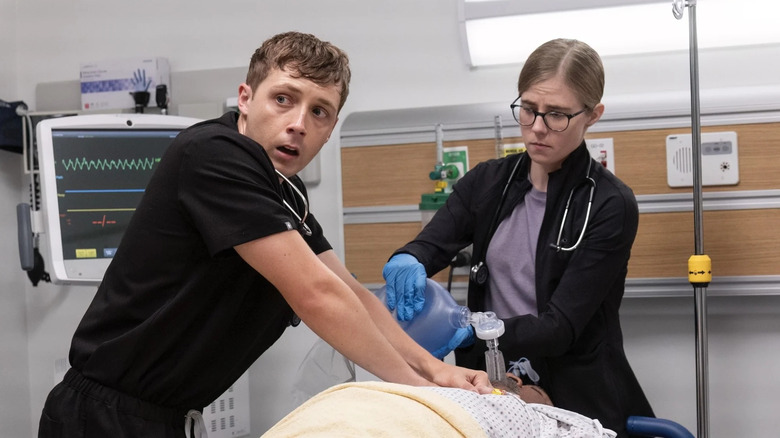
The stakes are high on hit medical drama “The Pitt” — and the most intense Season 2 plot point for Noah Wyle and the rest of the cast is “not actually a rare circumstance” in the hospital system, according to a real emergency room doctor. Seeing the hospital’s electronic medical records going down can create a strong reaction for real-life doctors watching “The Pitt.”
The show has seen its fair share of electronic medical records becoming inaccessible this season — specifically instances where the records needed to be turned off for fear of being hacked — but it turns out that the shutdown of electronic medical records can be somewhat routine for hospital staff. What’s worse is that it can happen for “anywhere from 20 minutes to three hours” and is considered a “normal” part of that system, according to ER doctor J Mack Slaughter in a recent interview with People.
Because it’s such a normal occurrence, it’s possible for it to happen at any time — even pretty inopportune times when the ER is packed with patients with time-sensitive ailments and needs. “This happened to me on a recent night shift,” Slaughter explained. “That was an absolute nightmare already. Then there were three hours where we didn’t have the electronic medical record, and it creates that level of chaos every time.” Sometimes, the medical records system goes down for routine maintenance, according to the medical professional, which is still just as disruptive to the flow of care.
The shutdown of electronic medical records can be quite the disruption
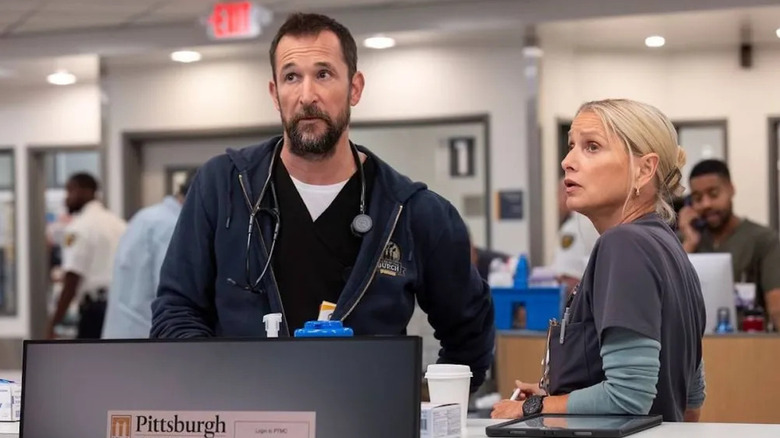
“It is very unsettling because it grinds the emergency department to a halt,” Dr. J Mack Slaughter described to People. “You do everything you can to try to write things down on paper and send them off.”
Dr. Slaughter noted that it’s not as simple as just starting to annotate manually in a patient’s file when electronic records aren’t available. There are electronic mechanisms within the system that the staff relies on to do their jobs at the level of standard. Those include “safety mechanisms and the ability to see into a patient’s chart, their prior visits,” explained the caregiver. “When we write prescriptions, it automatically does allergy checks for us, and if there’s any obvious interactions with other meds, it does that too.”
Needless to say, it would be preferable if there were a way to streamline the system to minimize or completely omit the need for these outages. “It’s a really big problem,” Dr. Slaughter lamented to the outlet. “… In my head, this is something that in 20 years they’re gonna be like, ‘Do you believe that on a scheduled basis every month, they ended up just going without electronic medical records?'” It doesn’t look like there’s a real-life solution on the horizon just yet, but let’s hope for the sake of everyone at the PTMC that there will at least be fewer outages on Season 3 of “The Pitt.”