CAMP is the kind of horror movie that looks soft until you realize it has teeth.
I went in expecting some flavor of summer camp slasher, the genre where teenagers get picked off between canoe trips. That is not this. Avalon Fast has made something stranger and a lot more wounded, a film about a girl who is desperate to be forgiven and finds a circle of people willing to forgive her, no questions asked, no conditions attached. The catch is in the woods. There is always a catch in the woods.
I watched it three times before talking to anyone involved, which is what I do when a movie refuses to sit still and let me label it. CAMP refused beautifully. It is dreamy, melancholy, queer, and it carries its magic so lightly you keep asking whether you saw it at all.
What CAMP Is Actually About

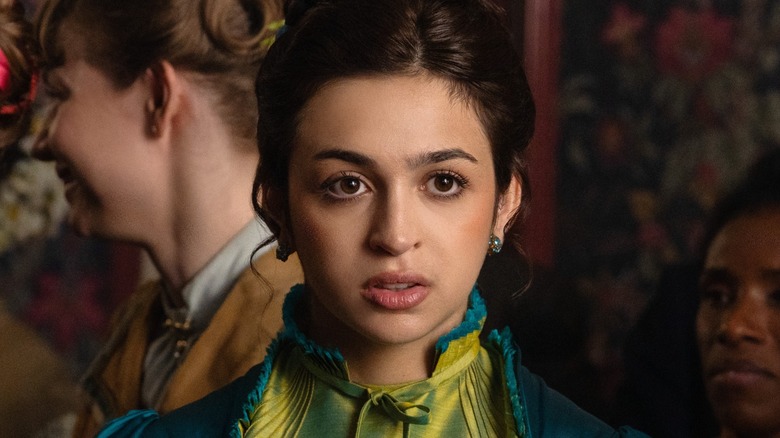
Emily, played by newcomer Zola Grimmer, is what the official synopsis calls the root cause of two devastating tragedies very early in her life. She carries that guilt like a curse. Her dad suggests she go work as a counselor at a camp for troubled youth, somewhere to set it all down for a while.
When she gets there, the other counselors take her in completely. They accept her, they wrap her in something close to peace, and they pull her toward a whole new way of living. Then there is the voice out in the trees, the one that keeps whispering at her to go home.
That is the shape of it. What the synopsis cannot tell you is the texture, which is hazy and sun warmed and quietly destabilizing. The witchcraft, when it arrives, is not pyrotechnics. It is candlelight and inference and the sense that these girls know something you do not. If you need every supernatural beat explained to you, CAMP will drive you a little crazy. I mean that as a compliment.
The performances are doing the heavy lifting, and Grimmer is remarkable, an open wound of a lead who makes Emily’s hunger for absolution feel almost unbearable. None of the counselors read as filler.
Avalon Fast on Grief, Girls, and a Subtle Kind of Magic

Fast is not coy about where CAMP comes from. It is personal, and it is about a very specific kind of friendship.
“Camp is a collection of so much nostalgia from a much younger part of my life,” she told me. “It was inspired by a closeness that I had with these two girls that I grew up with, and the ways that specific, fucked up people can make you feel right about yourself. That’s a huge part of camp for me.”
The grief in the film is just as personal, and Fast talks about it with a frankness most people reserve for a journal. She described being the person who wants to keep telling the story of her loss while everyone around her flinches.
“I am like that old drunk guy at the bar, repeating the same story over and over,” she said. “Camp is trying to put all of that somewhere, to hopefully one day not be rid of it, but to at least feel some kind of release from it. But that hasn’t happened yet.”
That ache is the engine of the movie. It is also why the witchcraft stays so understated. Fast does not want you certain of what is real, and she does not see magic as something that announces itself.
“To me, everything that happened there did happen,” she said. “It wasn’t some great act of magic. It was like we looked out the window and that’s what was happening.”
This is her second feature after Honeycomb, the lo-fi 2022 cult title she made as a teenager, and she will happily tell you she coined the phrase “girl horror” back then, half as a joke, half as a flag to plant. CAMP feels like that idea grown up a little, scarred a little, and a lot more sure of itself.
The Cast on Found Family and “Girl Horror”

The counselors talked about CAMP the way you talk about a summer that changed you, which tracks, because the film was shot tight and fast in a heavily forested camp and the actors largely held each other together.
They also pushed back, gently, on the marketing term following Fast around. Lea Rose Sebastianis turned the phrase over in her hands for a while before landing somewhere honest.
“Girl horror, so sick, doing it like nobody else, in its own category, its own lane, amazing,” Sebastianis said. “And at the same time, that categorization removes it from horror as a genre. It depends on who uses it.”
What nobody hedged on was the film’s refusal to make its women behave. The horror here is not a masked figure. It is desire, belonging, and the question of who you become when a group finally lets you all the way in. Lea Rose Sebastianis, who plays Nev, put the entire movie in a single breath when describing what she hoped audiences took from the character.
“You’re allowed to be a wild, free, sexual, sometimes evil woman, and you’re allowed to have love and community and forgiveness,” she said.
Alice Wordsworth, who plays Clara, framed the experience of CAMP as something that sneaks up on you.
“There can be something that you dream of your entire life, that you anticipate and expect,” Wordsworth said. “But in reality, it is something greater than you can ever anticipate.”
Who CAMP Is For, and Who It Is Not

Let me be clear, because I do not recommend things lazily. I recommend CAMP, heavily, to a specific kind of viewer.
If you like slow burn horror that earns its dread through mood instead of jump scares, this is for you. If you love witchy coming-of-age stories, found family, and movies about girlhood that do not flatten girls into types, this is absolutely for you. And, if you have ever wanted The Craft but lonelier, more lo-fi, and emotionally unstable in the best way, get a ticket.
However, If you need clean morality, a body count, and a tidy explanation by the third act, this will frustrate you. CAMP lives in ambiguity. It never tells you whether the people saving Emily are safe, and it is not interested in your comfort. The festival circuit has been rewarding exactly that nerve. CAMP won the Best Feature prize in Fantastic Fest’s Next Wave competition and screened everywhere from Sitges to SXSW Sydney to Seattle International Film Festival, and critics have followed, with the film sitting at 95 percent on Rotten Tomatoes.
CAMP opens in theaters June 26 through Dark Sky Films. It runs 111 minutes, and it is billed as horror, mystery, and thriller, though none of those words quite catch it.
CAMP understands that horror does not always arrive as a masked killer. Sometimes it arrives as forgiveness, a circle of girls in the woods, and the awful possibility that the thing saving you may also be asking for blood.