
[ad_1]
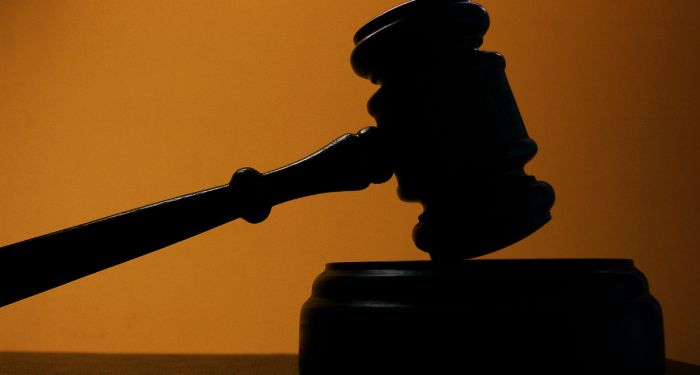
In 2023, Arkansas passed Act 372, a law that helps facilitate book banning and directly punishes library workers in the process. Among the provisions of the law were that librarians could be held accountable as criminals–a tactic being used in states across the country to punish library workers–for distributing materials some may consider “obscene” or “harmful to minors.” Library workers in violation could face up to a year in prison by allowing access to banned books in the state.
By June 2023, 18 plaintiffs filed a lawsuit against the new legislation. Plaintiffs included libraries, bookstores, advocacy group such as Democracy Forward, and individual library users. A month later, U.S. District Judge Timothy Brooks temporarily enjoined parts of law, meaning that it could not go into effect as planned.
Now, more than a year and a half later, this case has come to a close with Brooks permanently enjoining sections one and five of Act 372. Both sections were deemed unconstitutional.
“This ruling by Judge Brooks affirms the values that CALS librarians and, I believe, most of our citizens hold dear — namely that our Constitution does not deputize city boards or quorum courts, or librarians like me for that matter — to be the agents of government censorship by allowing any of us to remove or restrict access to books when some people in our community find the content or ideas in those books objectionable,” said Nate Coulter, executive director of the Central Arkansas Library System and plaintiff in the case.
Section 1 of Act 372 classified “furnishing a harmful item to a minor” a Class A misdemeanor. The section included no outline for determining what classified as “furnishing” material; this, of course, is typical of such recent legislative proposals, as it leaves the definition in the hands of whoever has the power in the moment. That could have meant handing a child a book in the library as much as it meant the book was available on shelves.
In his 37 page ruling, Brooks wrote:
While the State helpfully offers the dictionary definitions of these terms, those definitions provide no additional insight into the actions required of Plaintiffs to conform their conduct to the law. If a book with some sexual content were placed on a shelf or otherwise displayed in the teen or adult section of the library or bookstore, the librarian or bookseller could reasonably be accused of ‘furnishing a harmful item to a minor’ if a younger minor could access it. The vague and undefined terms in Section 1 thus subject the librarian and bookstore Plaintiffs to a credible fear of prosecution, as they are uncertain what lengths they must go to in order to comply with the law.
Section 5 of Act 372 involved the process by which materials challenged for their “appropriateness” were reviewed. In its initial iteration, this section would have pulled the materials outright; it was amended to note that materials deemed “inappropriate” for minors would be relocated to an area that minors would have no access to (this is similar to Idaho’s HB 710 that went into effect this year). Section 5 put no restrictions in place for who may challenge library material on the basis of “appropriateness,” so anyone in the state–or even outside the state–could challenge at any library, regardless of whether or not it was the library to which they paid tax money.
The head librarian of each library would be required to create a committee of library staff who represented a diversity of viewpoints, which would be charged with reviewing material. The committee would be required to read and review the material in full, even if the materials had been previously challenged. If the individual who challenged the material was unhappy with the results, then elected officials in the city or county would make the final choice on where material live within the library. Those elected officials, unlike the library committee, would not be required to review materials in full. This removed all expertise from the trained professionals and put it directly into the hands of those whose future as elected officials would hinge on their decision. Unlike the library committee reviewing the material, elected officials would not be provided any guidelines for how to proceed with the review.
Naturally, no guidance was provided in Section 5 for what did or did not constitute “inappropriate” material.
Brooks wrote:
The injury that Section 5’s challenge procedure will visit upon patrons of Arkansas’s public libraries is real and immediate. Section 5 removes final censorship decisions from public libraries and the professionals who run them and places them into the hands of local governing bodies whose members lack training and experience in these matters and are not bounded by similar selection constraints.
The ruling on this case is significant, as it will likely lay the groundwork for similar cases across the country, particularly in states which have implemented similar restrictions in their public libraries. States like Ohio already have their eyes on legislation in 2025 that would put the power of book censorship at libraries into the hands of special interest groups through HB556 and HB622.
In Arkansas, a bill that would overturn Act 372 has also been prefiled for the next legislative session. HB1028 mirrors Illinois’s anti-book ban bill by tying a small pool of money to anti-book ban policies in libraries state wide and then provides criminal protections for library workers and school employees when claims are made that they have provided “obscene material.”
This victory is a big one for libraries and the First Amendment. You can–and should– read the full 37 page ruling from Judge Brooks here.
[ad_2]
View Original Source Here



















.png "Fontaines D.C. Plot 2027 North American Tour")