
What’s the story behind the story? What inspired you to write this book?
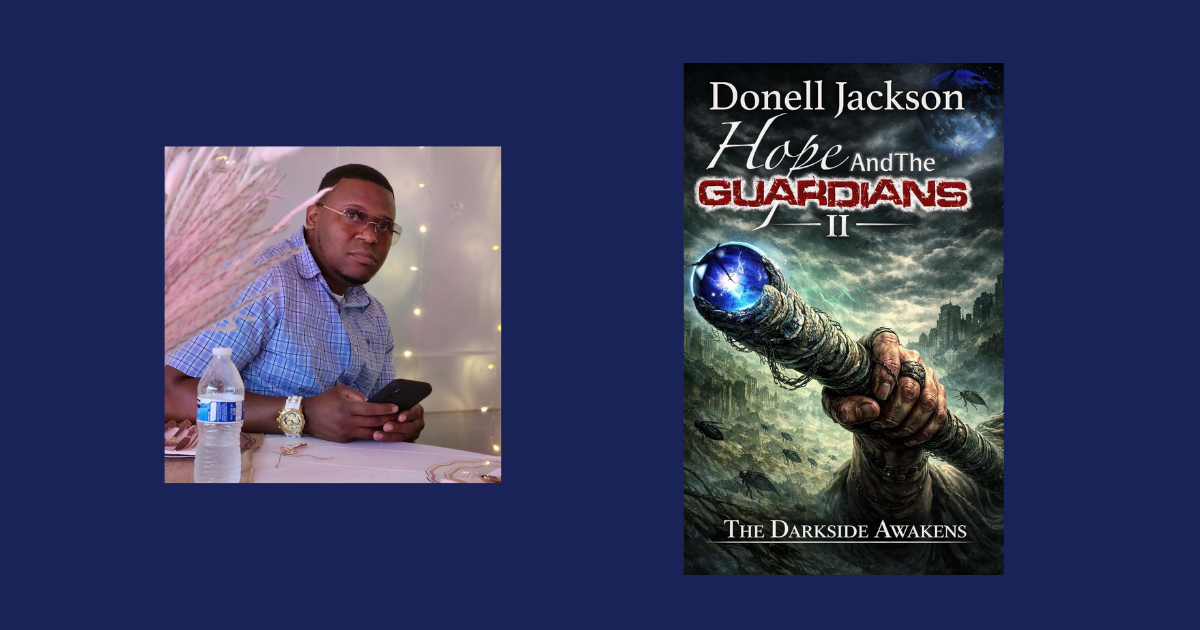
The story behind The Darkside Awakens really comes from exploring what happens after the “beginning.” In a lot of stories, we see the moment someone discovers they’re different—but we don’t always sit in what that actually feels like afterward. Book 2 is about that weight. I wanted to show what it’s like for Hope to live with something he doesn’t fully understand yet: the pressure, the fear of hurting people, the confusion of being pulled in a direction he didn’t choose. It’s less about the discovery of power and more about the responsibility that comes with it.
At the same time, I was really inspired by the idea that not all villains start as villains. Victor’s journey in this book was important to me. He’s driven by loss, and that kind of pain can push people into making decisions they believe are right—even when they’re dangerous. I wanted readers to feel that tension… to understand him, even when they don’t agree with him.
And then there’s Seeroni. He represents something different—something ancient, evolving, and unavoidable. He’s not just a threat, he’s a force that grows the more the world falls apart. That idea came from thinking about how fear and chaos can feed into something bigger if it’s left unchecked.
So this book was really inspired by three things: growth, pressure, and choice. Because in the end, The Darkside Awakens isn’t just about power… it’s about who you become when that power starts to change you.
If you had to pick theme songs for the main characters of your book, what would they be?
I’d say “Believer” by Imagine Dragons.
Because this book is really about pain shaping you… and what you become because of it.
What’s your favorite genre to read? Is it the same as your favorite genre to write?
Yes—fantasy has always been my favorite genre to read, and it’s definitely my favorite to write. What I love about fantasy, especially in The Darkside Awakens, is the freedom to build entire worlds while still telling very real, human stories. You can have Guardians, evolving forces like Seeroni, and powerful keys—but at the core, it’s still about emotions like fear, loss, purpose, and identity. As a writer, fantasy lets me take those real-life struggles and amplify them in a way that feels cinematic and unforgettable. And as a reader, I’ve always been drawn to stories where anything feels possible—but everything still has a cost. So for me, reading and writing fantasy go hand in hand. It’s where imagination meets truth.
What scene in your book was your favorite to write?
That warehouse fight between Kredarin and Seeroni was easily one of my favorite scenes to write.
It was the moment where everything shifted—from tension and buildup… to pure, undeniable reality. Up until that point, the threat of Seeroni felt distant, almost unreal. But in that scene, it becomes clear—this is something far beyond human.
What I loved most was the contrast.
You have Kredarin—calm, controlled, ancient power. Every movement calculated, every spell precise. And then you have Seeroni—raw, evolving chaos. Unpredictable. Violent. Growing stronger even as he’s being attacked.
Writing that clash felt cinematic. It wasn’t just a fight—it was a collision between order and chaos.
And at the center of it all is Hope… watching, realizing just how dangerous this world really is, and how unprepared he still is for what’s coming.
That scene set the tone for everything after. It showed that this isn’t a battle that can be won easily—and that the enemies Hope is facing aren’t just powerful… they’re evolving.
Do you have any quirky writing habits? (lucky mugs, cats on laps, etc.)
One writing habit that really helps me stay creative is listening to music while I write, especially R&B or jazz. There’s something about those genres that helps open up my mind and puts me in the right space creatively. The rhythm, the emotion, and the atmosphere of the music allow me to relax and let my imagination flow more freely. When I’m writing, I try to create an environment where my mind can fully focus on the story and the characters. R&B and jazz have a smooth, almost cinematic quality that helps me visualize scenes and feel the emotions I want to bring onto the page.
Sometimes the music even helps set the tone for certain moments in the story, whether it’s something intense, emotional, or suspenseful. For me, writing isn’t just about putting words down—it’s about getting into the right mindset. Music helps me reach that place where ideas start flowing naturally, and the story begins to unfold in a way that feels real and alive.
Do you have a motto, quote, or philosophy you live by?
“The best stories don’t just live in imagination—they come from the truths we refuse to ignore.” — Donell Jackson
If you could choose one thing for readers to remember after reading your book, what would it be?
If there’s one thing I’d want readers to remember after The Darkside Awakens, it’s this: Power doesn’t define you—your choices do. In Book 2, Hope is surrounded by forces much bigger than him—Guardians, Seeroni, even his own father—and all of them represent different paths power can take. Some try to control it. Some are consumed by it. Some use it for their own pain. But Hope is still in that space where he gets to decide who he’s going to be. And that’s what I want to stay with readers—the idea that no matter how overwhelming things get, no matter what you’re carrying… You still have a choice in what you become. Because in the end, it’s not the power that shapes the world. It’s the person holding it.








.png "Slayyyter Announces Wor$t Man in America")







![[Exclusive] ScareScore Launches at Screamfest, Letting Horror Fans Bodies Pick a Winner](https://ihorror.com/wp-content/uploads/2026/10/Screamfest-Logo-1024x246.webp "[Exclusive] ScareScore Launches at Screamfest, Letting Horror Fans Bodies Pick a Winner")