
“You can be innocent, but it will not make you survive.”
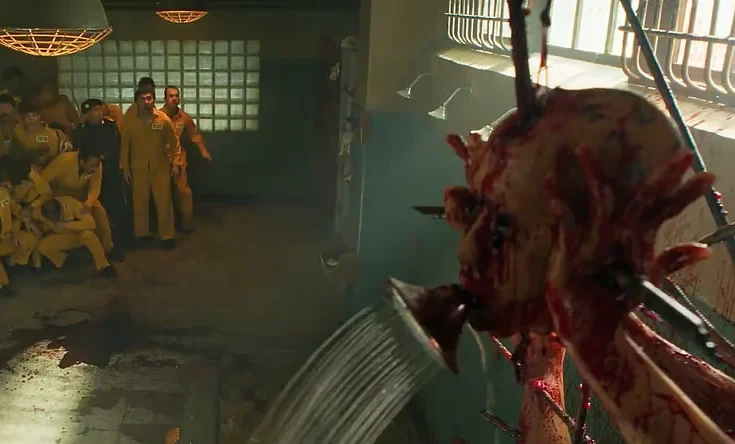
That’s how Joko Anwar describes the logic of Ghost in the Cell, his horror comedy about inmates in an Indonesian prison being picked off by something they can’t explain. The entity doesn’t care about anyone’s case file. After a blow to the head, one inmate starts seeing auras, and the men who die are the ones glowing red with anger. Whether you deserved to be locked up in the first place never enters into it.
Anwar is blunt that this is the point. “They don’t differentiate people whether they are innocent or not,” he told me over Zoom. “If you’re innocent, it will not make any difference. If you’re trying to do good in a society, it will not make any difference.”
That’s a grim foundation for a movie that also stops gang fights for prayer and dance breaks. The longer we talked, though, the clearer it got that Ghost in the Cell runs on two ideas at once. The system won’t spare the innocent, and the only answer anyone has is each other.
A horror comedy about corruption, on purpose

Anwar didn’t set out to make a lecture. “Of course we want to make an entertaining film,” he said. “It has to be scary, it has to be funny.” What sits underneath is heavier. He points to “a lot of corruption, massive deforestation because of the mining in Indonesia,” and says the film’s situation is “not a story, it’s actually real life.”
So why tell it as a comedy? “We don’t want to say this thing in a serious way,” he said, “because life is already difficult.”
What the inmates have instead of a way out is each other. “If we stick together, you know, it’s going to be easier for us, so we can come up with solutions,” Anwar said. “So, yeah, the movie is about togetherness and camaraderie.”
Innocent people die here

Anwar doesn’t let that togetherness turn into a safety net. Characters we want to see survive don’t. “There are a lot of characters in the film that’s still dead, being killed, even though they are innocent, and we want them to survive,” he said. “But they don’t, they die, because that’s what’s happening in the world, innocent people being killed and being demolished by injustice.”
He doesn’t take despair from that. “So the only thing that matters is to stick together, to have camaraderie between all the citizens fighting the system together.”
I asked whether that kind of solidarity is realistic now, or whether it takes a ghost hunting you down. He thinks it’s harder than it used to be, and he blames the feed. “The internet is not opening up our horizon,” he said. “In fact, the algorithm feeding us things that make us even more narrow-minded.” Then, without missing a beat: “But there’s always hope, I believe.”
Five honest guards

That hope has a number in the film: five honest guards out of 50. I asked Anwar how that squares with a system the film treats as deeply entrenched.
“I think it’s a choice to have hope,” he said. “We can just, what do you call it, like give up and just not doing anything, being apathetic about things. But there is always hope, and we don’t have to do big things.”
His idea of not doing big things is practical. Join a protest if you can. If you can’t, use whatever platform you have, even a group chat on your phone. “Togetherness, I think, is one step to be able to have a more powerful voice to speak up and to make change.”
The image he most wants audiences to carry out of the theater comes from the same place. It’s the moment the prisoners realize “that every one of them have a very strong role in solving problems that they are facing.” He ties it straight to life outside the movie. “Sometimes we feel that we are insignificant,” he said. Later he added, “If we truly understand that, even if we don’t think we are significant in life, we are.” And then, simply: “We are worthy.”
Why the jokes make it scarier

None of this works if the comedy lets the air out, and Anwar has a firm rule about that. Comedy in a horror comedy, he said, “should not be the release of the tension. It actually has to be able to enhance the tension.”
That starts with nobody on screen trying to be funny. The inmates are only trying to survive, and “most of these inmates, they’re not very smart,” so their plans are “sometimes illogical, and that’s what make it funny.” The laughs pull you closer to the characters, and that’s the trap. “If we are rooting more for the characters, it will make the tension even higher, because we really, really want the characters to survive the terror.”
That’s exactly why the innocent deaths land so hard. The film makes you like these men, then reminds you the thing loose in the prison doesn’t care whether you do.
When I asked what he’d pair it with for a double bill, Anwar didn’t hesitate: Ringo Lam’s 1987 Hong Kong classic Prison on Fire, starring Chow Yun-fat. It’s a natural match for a movie that believes the men inside the walls are the only ones who can save each other.