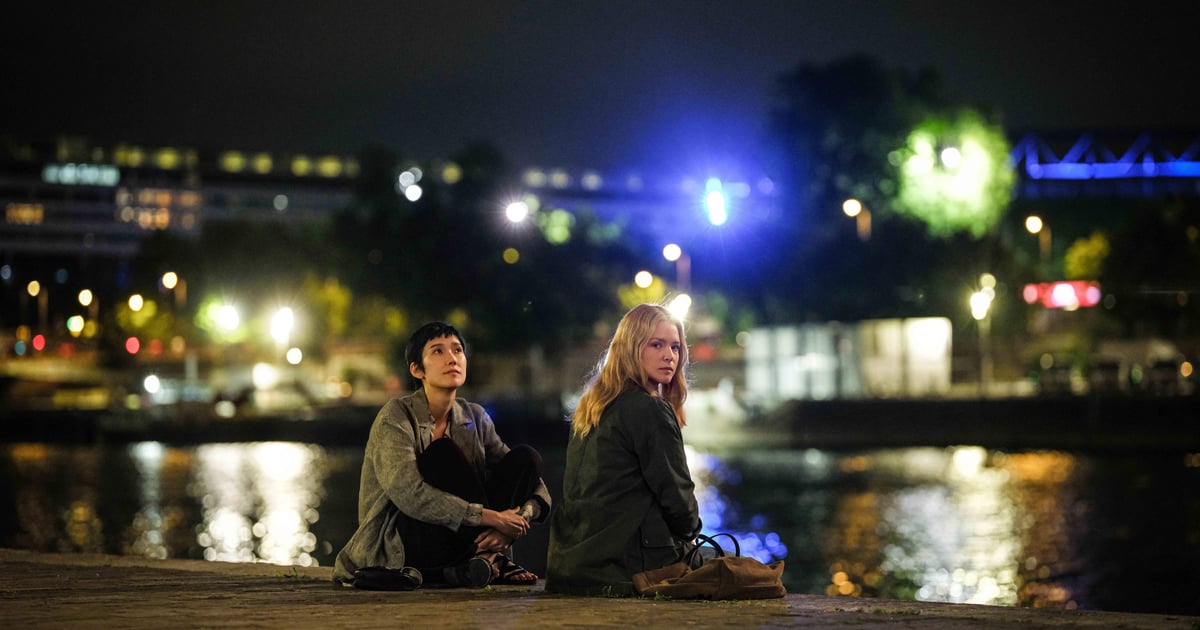

When we talk about “set pieces” in relationship to cinema, we often think of ajaw-dropping, computer-assisted visual sugar rush that is primed to leave the audience banjaxed with asense of breathless awe. In Ryusuke Hamaguchi’s tremendously beautiful and wise new film, All of aSudden, there is one such set-piece, and it involves acharacter, Tao Okamoto’s experimental theatre director Mari, using awhiteboard and two colour markers to meticulously illustrate the self-destructive folly of capitalism to another character, aprogressive care home director named Maire-Lou played by Virginie Efira.
Through the immaculately chosen words and delicate actions delivered by his actors, Hamaguchi dismantles and reassembles the world before our eyes, agasp-inducing spectacle of scholarly procedure that dares to look its audience in the eye with aguiding, inclusive smile.
Get more Little WhiteLies
This French language, Paris-set feature, co-written with Léa Le Dimna, is inspired by the non-fiction work, ‘You and I – The Illness Suddenly Get Worse’ by Makiko Miyano and Maho Isono. The story is set mostly at The Garden of Freedom, aParisian care-home for Alzheimer’s sufferers that specialises in anew caregiving technique with the slightly corny soubriquet of Humanitude. This special cognitive practice comes at the behest of Marie-Lou, acombined result of her academic studies in anthropology, and the experience of her mother’s swift decline as part of asystem where patients were treated as little more than columns on aspreadsheet.
Marie-Lou’s natural care-giving instincts and alittle bit of magical happenstance lead her into the wondrous sphere of Mari, who has mounted aplay on the subject the traditional psychiatric wars and, as the pair’s bond quickly evolves, the latter reveals that she has stage-four cancer and that time is not on her side. And yet Marie-Lou is energised and educated by Mari’s unlikely effervescence at this doomy precipice in her life, and the film is essentially achronicle of the pair’s time together, which includes adarting trip to the Kyoto countryside for al fresco Cup Noodles and an extended stay at The Garden of Freedom, where both women’s professional disciplines find ahappy place tomerge.
While the spectre of Mari’s death hovers over All of aSudden, the title even referencing the nature of her decline, it’s an overwhelmingly affirmative and philosophical film in which apair of hyper-articulate characters attempt to use language to unpick the mysteries of the human comedy. There are multiple theatrical performances which nest neatly within the drama, and there are numerous Q&A sessions – aHamaguchi kink – in which the unique dynamic of responding to intimate questions in publicallows for the most unguarded and poetic answers. Efira and Okamoto hopscotch effortlessly between French and Japanese, asuggestion that they are able to communicate with one another on alevel more profound than normal. And Hamaguchi, as he did in films such as Drive My Car and Happy Hour, makes sure that the supporting characters are given colour, backstory and asoul.
Initially we discover that there is some pushback against the Humanitude system, mainly from career nurses who feel that their professional stature is being eroded by this suggested breakdown (and eventual destruction) of the space between patient and caregiver. Yet part of film’s function is to make acase for Humanitude, not merely as aform of care, but as away to tell stories, to meet people, to forge aconnection, to find asliver of happiness in this dark, dark world. That, sometimes, making the effort to understand someone – to meet someone at the own level – can be as valuable as actually understanding them.