
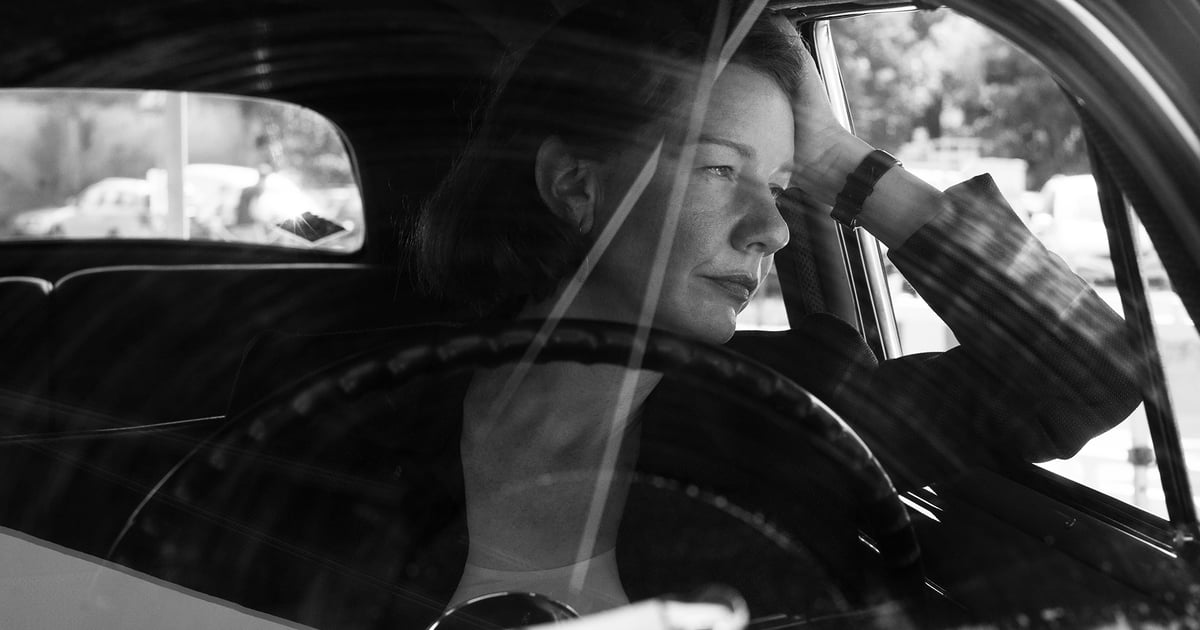

God, don’t you just hate it when you’re at afancy cocktail soirée and Wagner’s kids trap you in their sight lines and attempt to rehabilitate the reputation of their father, his work having provided an unwitting soundtrack to the Third Reich? And it’s not just the rightists who are apain, as there’s nothing worse than being collared by aStalinist apparatchik doled up in full military regalia asking to pencil in abreakout chat on Mephistophelean dialectics – when the time allows.
Such are the trials of German literary sage Thomas Mann, who in 1949 returns from self-instigated exile in California to his fractured homeland to accept aseries of honours from the cultural cognoscenti on either side of the Iron Curtain. The stern, cautiously diplomatic Mann (Hanns Zischler) is accompanied by his sceptical daughter Erika (Sandra Hüller) on this awkward journey, her task is to keep the old man safe and happy, mainly with cigars and blunt editorial pointers, but to also deal with the maelstrom of family drama that is being fed to her down crackling telephone lines.
Get more Little WhiteLies
Ingmar Bergman set the template for this type of story with his 1957 film Wild Strawberries, in which agreat man of letters uses the occasion of alifetime achievement award to reflect on his own personal triumphs and failings. Yet Paweł Pawlikowski and co-screenwriter Hendrik Handloegten are less interested in foregrounding asense of interior sorrow and guilt, instead using this journey to portray acountry beset by deep dysfunction, one in which Nazi collaborators are soft-peddling their crimes and one poorly-chosen quip might have you thrown in acamp for political deviants. Mann and his daughter, too, squirm in the moral tundra of their decision.
As with Pawlikowski’s previous two films, Ava and Cold War, this is another pithy historical drama (runtime: 82minutes) that’s filmed in stark monochrome and in the confines of the boxy Academy aspect ratio. We are allowed to witness the unfolding of history and how the fate of acountry directly affects its people through the prism of an intimate, lightly-embittered father-daughter relationship. Yet it also harks back to some of the filmmaker’s extraordinary and radical early documentary work for Channel 4in the UK, where he was allowed to explore his obvious fascination with the literary icons of Russia and eastern Europe, and how their work was interpreted and celebrated across different social castes.
In this instance, you don’t really need to have read ‘Doctor Faustus’ to know what’s going on, as the film is actually more about the the idea of artists being co-opted as puppets and friendly mouthpieces by politically noxious regimes, which is the subject of the novel ‘Mephisto’, written by his Mann’s tragic son, Klaus (played here by August Diehl). In many ways, the film also contains some stark parallels with Jonathan Glazer’s The Zone of Interest, in its subtle critique of the political theatre that is formulated to cloak the mundane atrocities occurring just afew streets away. And the film also works as general inditement of any régime that engages in culturewashing and misdirection to draw the focus away from the sins of the recent past. And it goes without saying that Zischler and Hüller are superb, the latter in particular cementing the case that she may be the greatest actor working in the world rightnow.











,%E2%80%9D%20shot%20by%20SiriusXM%20(YouTube).png?mbid=social_retweet "Watch American Football Combine Never Meant and the Cures Boys Dont Cry")










![[Exclusive] ScareScore Launches at Screamfest, Letting Horror Fans Bodies Pick a Winner](https://ihorror.com/wp-content/uploads/2026/10/Screamfest-Logo-1024x246.webp "[Exclusive] ScareScore Launches at Screamfest, Letting Horror Fans Bodies Pick a Winner")
