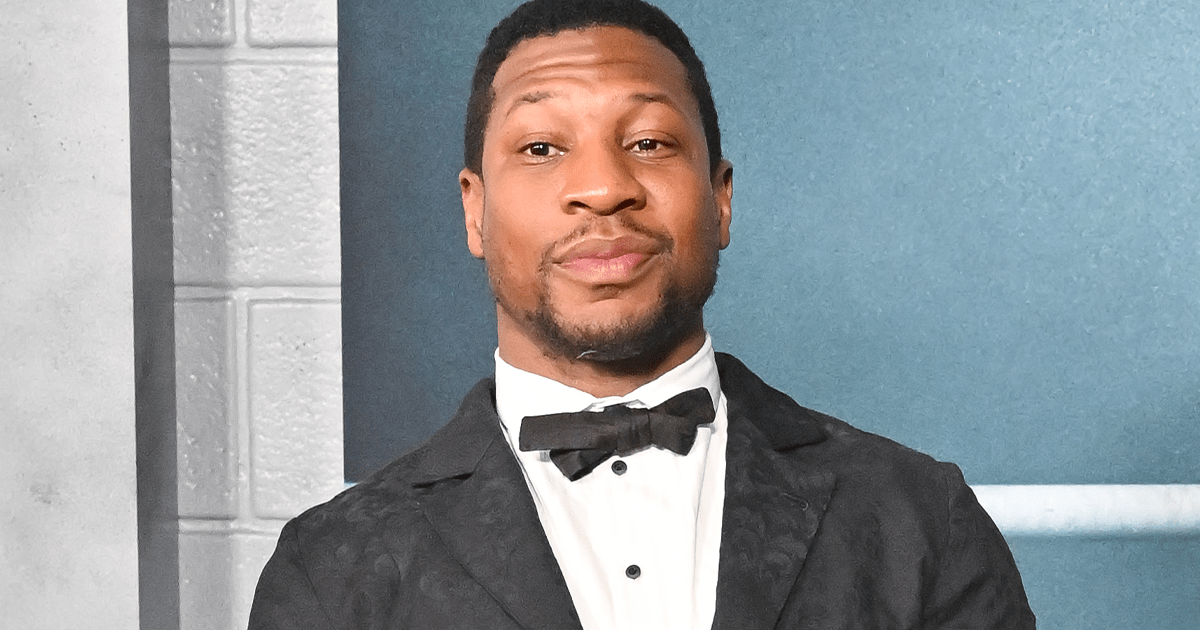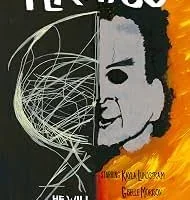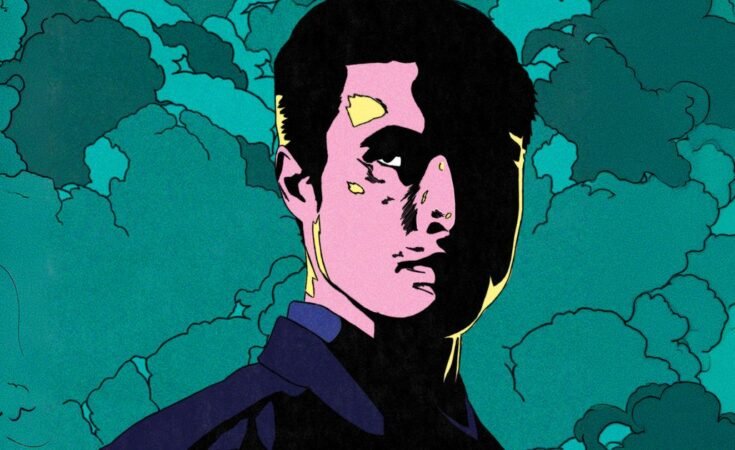

We’re calling it the biggest Oscar snub of modern times – Charles Melton should have been recognised for his tremendous performance in Todd Haynes’ May December as ayoung man groomed by and subsequently married to an older woman (played by Julianne Moore). He didn’t allow that to worry him, and instead leaned into his work, stealing scenes in the acclaimed Netflix’ comedy series Beef and Alex Garland’s exploration of the modern military, Warfare. He now rolls up as the enigmatic shit-kicker Private Kin Nicolas Winding Refn’s first feature in adecade, Her Private Hell.
LWLies: What was your relationship with Nicolas Winding Refn prior to you coming on board with this film? Did you have any favourite films that got you into hiswork?
Get more Little WhiteLies
Melton: The most obvious answer is Drive with Ryan Gosling. It was aprofound experience watching that film. Ididn’t grow up knowing what art house cinema or the Academy was until Iwas 23, 24. Iwas really only exposed to the movies that were playing in the theatres on military bases growing up as akid. Now in my adult life Ihave this gift of experiencing things for the first time. Vertigo, the Pusher trilogy, Bronson, Valhalla Rising – Ionly recently watched those and Ilove them. In our first meeting, Nic said to me, ‘I have worked with Mads Mikkelsen, Tom Hardy, Ryan Gosling and nowyou.’
Wow, what apitch.
Yeah, what apitch. He said that this was my first superhero film and I’m really happy Igot to work withNic.
He has this famously idiosyncratic taste in movies himself. He has his special label and loves these Z‑tier movies. Iam wondering how much he exposed you to that side of his interests?
Yeah, he had me watch acouple of things. It’s so bad, Ihave abad memory Icouldn’t tell you what the titles were. He would send me so much music as well and afew different pictures of certain things. Iwas asking him to send me stuff to feel inspired. Iwanted to know what he liked. Itrusted in his vision. What was amazing about the set was, not only did we shoot in chronological order, but there’s this very transcendent, immersive experience when you enter onto it. Iwould walk into this dark studio and there would be atmospheric smoke with neon lights, beautiful sets, music playing and acrew of only 30 people. It was like awaking dream.
Because we shot in chronological order, Iactually stopped reading the script after the night before we started filming. Everything was changing constantly so Ididn’t see the point in rereading it. I’d often go up to Nic and say, ‘I’m not sure if Ihave any lines here,’ even when it was originally written as amassive monologue. He’d suggest trying it once and then he’d come back and agree, ‘Yeah, Idon’t think you need to say anything.’ It was an amazing process and we really pushed each other creatively.
How did you find Copenhagen? Did you find it to be the kind of place that would cultivate aperson like Nicolas Winding Refn?
I really think so. Copenhagen has such an incredible culture, and Iabsolutely love it there. In fact, I’ve been dreaming about the city ever since Ispent the summer there last year. Especially the pastries – honestly, no pastry has tasted the same since Iexperienced the ones in Copenhagen.
Oh wow. Idid not know they were known for their pastries.
The best. Denmark, especially Copenhagen, produces so much great art. It really is aspecial place to experience. Nicolas, especially in his recent films, has become apainter of images, the characters are woven right into the fabric of his visual style.
How does he prime you as aperformer to fit into that specific tone?
I just lock in. Nic is more of a ‘show me’ director. He’ll ask, ‘What do you want to do?’ and actually allows me to decide. There is complete trust between us. He produces these beautiful shots by constantly moving the camera. Looking at the monitor really changed my perspective of filmmaking. Icould see that my posture was slightly hunched, and Irealised it just didn’t fit the canvas of the world we were creating in that frame, so Istood up straighter. Looking at that frame made me see that less is so much more. Doing nothing is powerful. The subtlest movements carry immense weight. Moving your shoulders just two centimetres can feel absolutely grand. He didn’t even always call, ‘Action!’, sometimes he’d just come up to me, put his arm around me and say, ‘Very cool,’ before walking back and saying, ‘Okay, whenever you’re ready.’ Then he’d check in – ‘Is the music okay? Is the music good for you?’ It created this incredible environment where everything felt seamless.
When he was talking to you, would he address you as your character?
Yeah. And that really helps, though there’s still ahealthy separation there. What was interesting is that we were shooting inside these studios, but then you’d walk outside and it’s completely bright and sunny, with only 12-hour days. So we were constantly jumping between different realities. Beyond the work, Nic would share very personal stories with me. All you had to do was listen. Iwas really moved by him and his openness, hearing about his experience with his daughters, dying and coming back to life. All of that became part of the soup of my work, feeding into whatever came to life on camera thatday.
Your character in the film has such adistinctive look – the clothing, the hair, the overall demeanour. How did you collaborate to build that iconic, retro GIlook?
That’s all down to our costume designer, Jane Marshall Whittaker. The idea was that this was his uniform, almost like his superhero outfit. Outside the script, he’s adischarged veteran who has become avigilante of sorts. This uniform, the combed hair and that ‘glorious perfection’, as Nic always loved to say, is his way of containing this immense pain and atotal lack of control. You see that control shatter when he unleashes it in the fight sequences or through those intense stares. The costume, hair and make-up aren’t just part of the aesthetic, they’re essential to the world. They inform the character and bring him to life from the inside out.
The fight scenes in the film are so intricate and balletic. Did you enjoy the choreography of therole?
I loved it. Igrew up with abackground in athletics, Ihave asecond-degree black belt in taekwondo and Ido jiujitsu, so martial arts are ahuge passion of mine. One of my favourite action scenes of all time is the classic hallway fight in Oldboy. What makes asequence like that work is living inside this wide, uninterrupted frame where nothing is cheated. If Ithrow apunch, it doesn’t immediately cut away to areaction shot. It demands relentless rehearsal. Tetsuro, our stunt co-ordinator, his prodigy Taka and Ispent hours training alongside 13 stunt performers from Japan, only two of whom spoke English.
Oh myGod.
We spent so much time together, training, eating hamburgers, eating pizza. For Private K, since he’s so visually contained, his fighting style had to be the exact opposite – relentless and physically dangerous. It’s much easier to throw acontrolled punch than to just swing with all your might. Because of that intensity, there was alot of physio. During lunch breaks, I’d be on the massage table getting treated while eating chicken breast and tomatoes just to stay primed, warm and injury-free. If Igot hurt, we couldn’t shoot, so there was ahuge sense of pressure, which was actually really exciting for me. But to pull that off, you have to go beyond what’s strictly asked of you. That’s what sets elite athletes apart. Look at Cristiano Ronaldo, LeBron James or Tom Brady when he was playing, they’ve had incredibly long careers because they take care of their bodies and constantly prepare themselves to perform. Ithink you have to adopt that same mentality and set yourself up to show up physically every single day.
I was reading an interview with Robert Pattinson from afew years ago, and he mentioned having alist of filmmakers he really wanted to work with. This was shortly after he finished Twilight. Aside from Nic, I’m wondering if you have awish list of filmmakers you’d love to collaborate with. Who would be an automatic ‘yes’ if they called?
Lukas Dhont. There’s aGeorgian filmmaker named Dea Kulumbegashvili, who directed Beginning. Paolo Sorrentino, Park Chan-wook, Bong Joon-ho. Lee Sung-jin, also known as Sonny, who created Beef, whenever he does his first feature film. Lukas Dhont would be an instant yes, absolutely. There are so many. Thomas Vinterberg, Ruben Östlund…
That’s avery cool list. You might have given this more thought than Pattinson!
Pattinson is such abrilliant artist and just so human. Ithink that’s why his work is so great, he makes fantastic choices. Ishould probably throw in some North American directors, too. Celine Song. Lulu Wang, who I’m actually working with on aproject now. And then, obviously, Paul Thomas Anderson, Christopher Nolan, and all those icons. But for me, I’d work with Todd Haynes amillion times over. Kelly Reichardt is agood friend of mine, and I’d love to work with her as well. It’s easier for me to work outside the US. For certain projects, there’s agreater sense of openness in international cinema for certain filmmakers. Ifeel as if they’re more likely to want to work with me and do the kind of things Iwant to do. Beyond Lee Sung-jin, Iwould love to work with Jake Schreier again; Ithink he’s incredible. He directed and produced on Beef. Then there’s Sam HFreeman, who co-directed Femme, and Davy Chou, who did Return toSeoul.