
In Christopher Nolan’s The Odyssey, ancient Troy is played by the Ksar of Aït Benhaddou, an 11th-century Moroccan fortress known for imposing mountain ranges nearby, golden Saharan sun and a30 per cent tax rebate. The film has attracted considerable debate about historical authenticity, with intrigued onlookers scrutinising everything from costume to casting. Nobody, however, seems particularly troubled that Troy is in Morocco rather than northwest Turkey. And why would they? Cinema has often understood that alocation is not about latitude and longitude but whether aplace evokes an unshakeable texture, mood or feeling.
What has changed for Hollywood is the direction of the substitution. For decades, California’s gravitational pull was so strong that the world was recreated on its own doorstep. Century City stood in for New York; the Santa Clarita Valley hosted historical battles, alien planets and the entire American frontier. Los Angeles didn’t need to go anywhere because everywhere came toit.
Get more Little WhiteLies
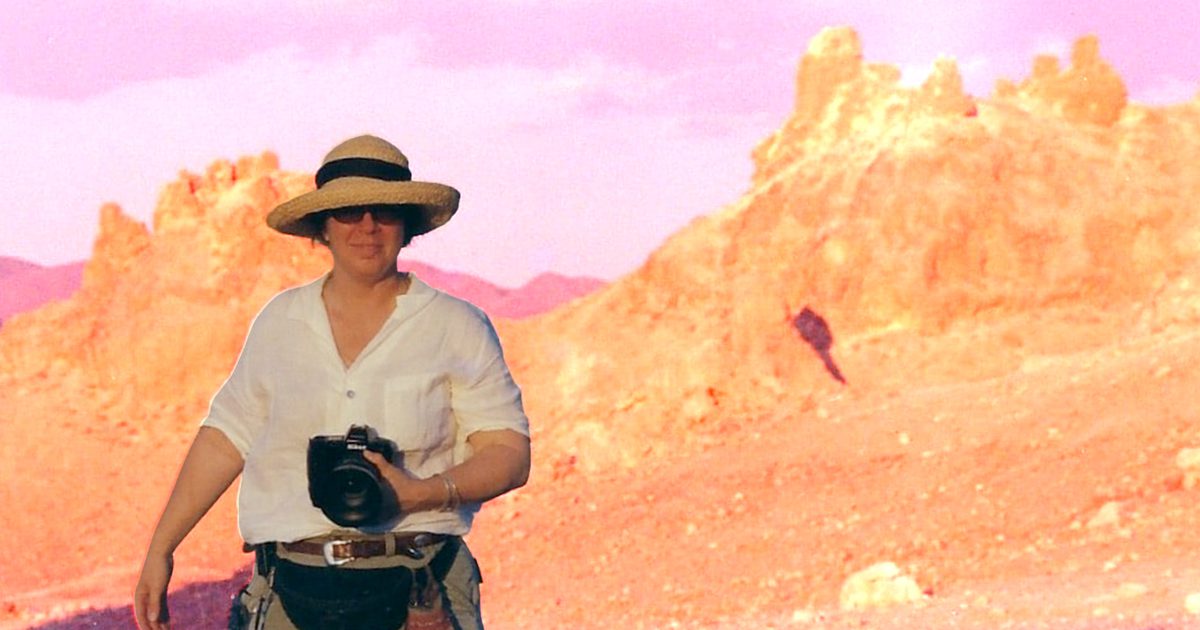
Now the reverse is true. Atlanta has become Hollywood’s domestic surrogate, beloved by the MCU and prestige TV, while Vancouver has doubled for virtually every corner of America. Hungary’s architecture became 1950s America in The Brutalist, Jordan’s Wadi Rum transformed into Mars for The Martian and Abu Dhabi’s Liwa desert became the arid spice planet Arrakis in Dune. The first task is how to accommodate the story, then it’s all about checking the rebate. It is acompromise that has come to define modern Hollywood, now more of abrand than an actual locale, and few understand its shift better than Lori Balton. As one of Hollywood’s most celebrated location scouts, she still has an eye that has shaped the visual language of films from Heat to Inception, The Aviator to Top Gun: Maverick. But even at the top of her game she describes how, “I used to get handed ascript and they’d ask me where we should shoot. Now Iget handed ascript and they tell me which countries Ihave to shoot in according to incentives.” That shift, from creative fluidity boxed in by rigid financial and political concerns, is amicrocosm of where “Hollywood” actually is rightnow.
Location scouting is one of cinema’s least lauded crafts. When Balton found the windswept Montana rivers that gave Robert Redford’s ARiver Runs Through It its sun-dappled elegance, nobody thought of the months she spent scouring the great outdoors. When she scouted Yellowstone’s geysers for The Lion King, nobody considered it afederally protected landmark, accessed only after Balton personally persuaded park officials that afilm credit would send families streaming to visit. The location disappeared into the story, which, as she stresses, is the whole point. “We always used to refer to ourselves as the red-headed stepchild of the film industry,” she says, laughing. “We’re doing something so important, and yet if we do our job well, nobody thinks ofus.”
In 2013 Balton became the first location professional invited to join the Academy of Motion Picture Arts and Sciences. Her early work on Michael Mann’s Heat, one of the most iconic portraits of Los Angeles committed to film, illustrates how great scouting actually elevates amovie. Mann wanted the city to feel “discovered rather than filmed”, insisting on locations that had never appeared on screen before. Not asingle soundstage was used, and the crew nearly lost their shot at Los Angeles International Airport when the Unabomber threatened the facility.
It was the beginning of arun of films Balton looks back on with warm nostalgia. “I’ve worked in alot of movies, right before this last downsurge, where they were still making good storydriven films,” she says – Seabiscuit, Gary Ross’ Depression-era underdog story; Memoirs of aGeisha, Rob Marshall’s ravishing portrait of prewar Kyoto; Catch Me If You Can, Steven Spielberg’s sun-drenched chase across mid-century America. Since then she has travelled the length of the Amazon River for Disney themepark adaptation Jungle Cruise and spent time in the highlands of northern Vietnam, staying in people’s homes, for the MCU saga Shang-Chi and the Legend of the Ten Rings. Hers is acareer that charts Hollywood’s own expanding geography.
The map, today, looks nothing like it did when Balton started. The UK pulled in £6.8 billion in production spend in 2025, offering rebates of up to 53 per cent and alandscape of remarkable range: Georgian townhouses, medieval castles, the post-industrial north. Hungary has become ago-to for productions that need the Continent on abudget. Australia offers red-ochre vastness and turquoise coastline at 30 per cent backend.
In every direction the reshaping continues. Wadi Rum has become the default for the otherworldly; Rogue One, Andor and asuccession of streaming productions have planted their stories in the rose-red desert, while the rain-sodden streets of Glasgow became Gotham in The Batman. Saudi Arabia’s AlUla, which comes with a40 per cent rebate, is emerging fast as apopular filming location, while Japan’s 50 per cent scheme is already drawing significant productions. South Korea, cultivating the momentum of Parasite and Squid Game, is aserious draw for nonwestern aesthetics backed by experienced crews. And California? “There’s just no work in LA,” Balton says simply. “Sad.”
The financial logic is not complicated. Incentives reduce costs and international infrastructure has improved to the point where many more locations can sustain studio-scale filmmaking. “There are whole departments now for people who just work on incentives. That’s all they do. Because they change constantly. And everything is fudged alittle here and fudged alittle there,” Balton explains. “The question is how little can you do it for. And you’re starting to see that there’s alot of content, and agrowing percentage of it is just shit. But occasionally when you find something great, everybody tells everybody about it. Because we’re all dying for something that has agreat story and great locations.”
The studios, she argues, were once driven by taste. “It could have been bad taste, but at least they had ataste. There was apersonality behind things that were made, and now it’s just adollar. The thing that rankles is that incentives rob you of serving the director with the best options.” She has developed her own form of resistance, always including the most compelling location regardless of the numbers. “My drive is to give the director the right location. They might not know what they want. Once Ishowed Michael Bay the opposite of what he asked for and he said it was perfect. Is it evocative of the story? That’s all that matters.”
The question of what makes alocation cinematic rather than merely scenic reveals something essential about how Balton sees the world. Tourist boards want to show her their greatest hits, but, as she puts it, “I’d rather see beauty in odd things. Show me something gritty and off the beaten path.” The favelas of Brazil are acase in point. “That is one of the most beautiful things about Brazil, the favelas and the life that’s packed in there. It’s amazing.” She has watched productions recreate them elsewhere and found the results wanting. The real flavour of aplace, when aproduction is bold enough to use it, is irreplaceable. It is aphilosophy shaped by decades of travel, and she cites Mark Twain: “Travel is fatal to prejudice, bigotry and narrow-mindedness.”
Her favourite destinations reflect this ethos – Iceland, for its wild terrain that has made it one of the most filmed landscapes on earth, and Namibia, possibly the most “breathtaking” country she has ever visited. “The locations there are unlike anywhere else. It’s so underpopulated that you can travel vast distances without seeing another humanbeing.”
The rise of VFX plate work has given Balton anew kind of freedom. On Barry Jenkins’ live-action version of The Lion King, alocation needn’t have anearby hotel or airport. On Shang-Chi, the rainforests and terraced rice paddies of northern Vietnam could be captured after long treks on foot and then carried home. Recently, going through her hard drive, she found herself overwhelmed. “It almost brought me to tears to just see all of the places in the world that I’ve been.” Decades of landscapes, quietly accumulated in the service of other people’s visions.
There is adimension to the global production story that shapes everything: labour. Hollywood’s union structure – SAG-AFTRA, the DGA, the Teamsters, etc – was built to protect workers, but field production doesn’t always honour those protections, and structuring shoots to sidestep union jurisdiction is agrowing concern.
Balton, aproud Teamster for 35years, is characteristically direct. “Unions enforce wage rates, work hours and mandatory safety protocols. Ibuilt my career and my future being aunion member.” She is withering about exploitation dressed up as opportunity. “They have this attitude that you should be grateful. I’ve been doing this for 35years. You are not hiring aminimum-wage person when you hire me.” The real casualties are not the titans of the industry. They are the crew members, the drivers, the technicians, the workingclass infrastructure of afilm industry that took generations to build and is now being quietly dismantled, one incentive table at atime.
California’s refusal to establish competitive incentives handed Atlanta, and then the world, the business. “We educated our replacements,” she says of the years training local crews who eventually rendered the imported Californians redundant. The state that built its tourist appeal on cinematic visibility has ceded immense ground and is only beginning to reckon with what it haslost.
Asked what gives her hope, Balton finds something sustaining in the international films she screens as amember of the Academy. “The international films are arevelation. No major talent, no major special effects, just awell-written story and locations you’ve never seen before. When Isee what’s coming from all over the world Iappreciate that what’s beyond Hollywood is sustainable. So Ithink cinema will limpon.”
In the end, what Balton offers is not just expertise but areminder of what the whole enterprise is supposed to be for. “I think you have to be avery curious person to be agood location scout,” she says. “Curious, interested in people and you have to believe in the potential of movies.” In an industry that has mistaken abrand for aplace, that curiosity may be the most radical position ofall.


![Peaky Blinders: What happened to Freddie Thorne? [News]](https://i.ytimg.com/vi/nh3eXsFB1rU/sddefault.jpg "Peaky Blinders: What happened to Freddie Thorne? [News]")