
In a2023 interview, Liam Neeson, who played Jedi Master Qui-Gon Jin inThe Phantom Menace, chalked up his disillusionment with the ever-expanding number of Star Wars offshoots to their insistence on contorting themselves to the confines of television. “I’m abit of asnob when it comes to TV,” the actor admitted. “I just like the big screen, you know?” Amusingly, Neeson had in fact returned for atwo-line performance in theObi-Wan Kenobitelevision series finale just ayear prior to these remarks, but there is some truth to the actor’s comment that the averageStar Wars title may no longer hold the sort of cultural cache that previously placed it amongst the more reliably prestigious blockbusters in Hollywood. What was once afranchise defined by its ability to create must-see cinematic events every few years – full of endless speculation and fan anticipation in the lead up to sold-out midnight premieres – has instead been transformed into asteady pipeline of weekly content drops that can be accessed in just afew quick presses of abutton, creating asense of non-urgency that turns astring of already fairly anonymous shows into ones that feel like homework (fancy an episode ofSkeleton Crew anybody?).
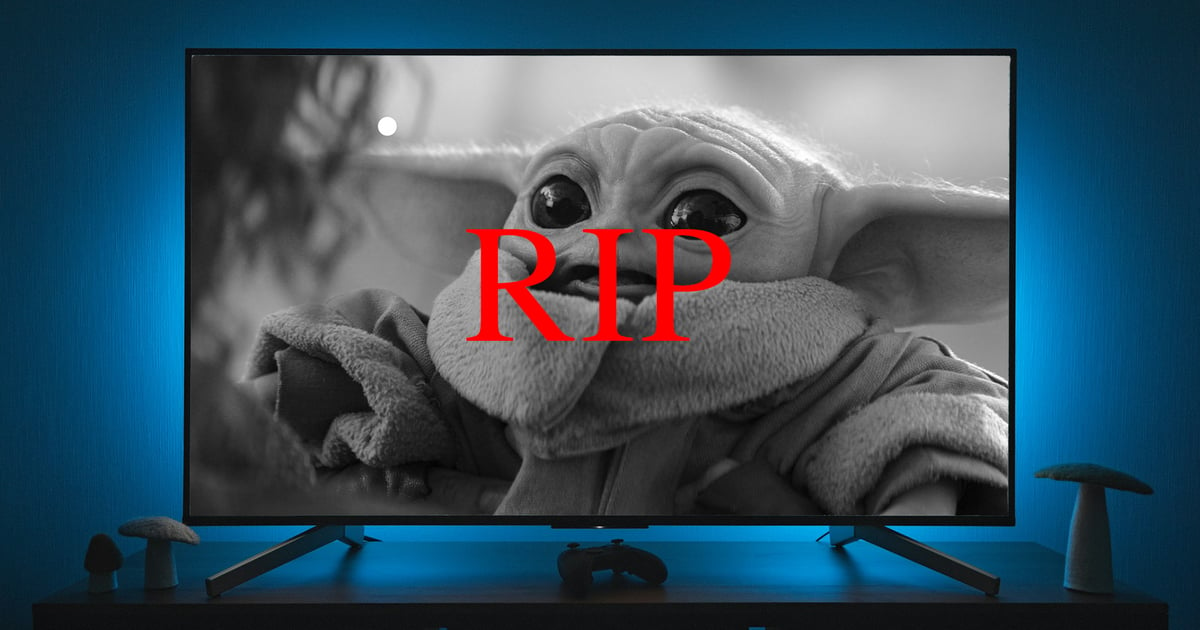
With Lucasfilm’s theatrical slate only just starting to get back on track, the future of the big-screen Star Wars experience looks even grimmer. As the franchise’s first movie in nearly seven years,The Mandalorian and Groguwill become the only film in the series to be acontinuation of an already existing television show. Though its freshman season was an undeniable hit – in part thanks to its clever retrofitting of Lucas’ original samurai and western influences into aweekly episodic format – later installments would see this structure abandoned for perfunctory tie-ins to the films and other pockets of the accepted canon, with characters like Boba Fett and Ashoka Tano snipping up screentime to launch their own backdoor pilot storyarcs.
By the time its cinematic counterpart releases later this month, the series’ excessive focus on lore-building – compounded by the fact that some of its most interesting creative talent have already departed for brighter things – has resulted in adiminished final product with the drab visual aesthetics of ageneric streaming show; more closely resembling afeature length episode of television rather than the cinematic awe typically synonymous with StarWars.
All of this signals ashift towards the kind of dull and innocuous filmmaking sensibilities that have recently coursed their way through Hollywood, with studios like Disney increasingly favouring aroster of ‘safer’ in-house directors such as Jon Favreau, Ron Howard and next year’sStar Wars: Starfighterhelmer Shawn Levy – who was entrusted with akey to the franchise after netting the Mouse acool $1.3 billion with the Epic Bacon humour ofDeadpool &Wolverine – over the unique visions of auteurs like Rian Johnson, Steven Soderbergh and Phil Lord &Christopher Miller, who all departed their individualStar Wars projects due to creative differences (the latter being particularly egregious in the wake of the runaway success ofProject Hail Mary).
As this simplified redirection begins to take shape, another one of its unfortunate side effects is the placation of those responsible forracist backlash towards more intriguing projects likeThe Acolyte, atrend made especially frustrating after the tremendous critical acclaim ofAndor (a prequel to spin-off filmRogue One) proved that the franchise didn’t have to sacrifice its narrative engagement to be reflective of current events. As dire as it may sound, anew Star Wars film will most likely always make enough money needed for the corporate suits in charge of greenlighting them to parade one around as asuccess. But with the exact nature of its future uncertain in the wake of leadership changes at Lucasfilm, audiences can only hope that the powers that be will choose to focus on new corners of the galaxy rather than retread already established ground.
A long time ago in acinematic universe far, far away, the films of acertain British spy with alicense to kill also suffered their own identity crisis after arun of progressively absurd adventures forced acomplete reset of the brand’s tone and iconography for modern audiences (though it will no doubt be interesting to see how the character continues to evolve after being sold off for parts to Amazon). Whether or not asimilar recalibration needs to take place with Star Wars is up for debate, but if the franchise remains hesitant to break away from some of its most entrenched legacy storylines, it might as well be better off sliced into pieces and launched into the endless depths of space. Chances are, someone would resurrect it in afew years anyway.











:upscale()/2026/10/13/153/n/1922564/tmp_RifOqX_d39230e02ba15bb7_Untitled_-_July_08_2026_at_16.34.00-4-Main_2_up_-_1456x970.png "I Put Kylie Jenners Meta Glasses to the Test and I Have Thoughts")
:quality(85):upscale()/2026/10/14/739/n/1922564/2321331c6acfb17488fb99.70103842_.jpg "I Tested This Viral Luxury Fashion Rental App and It's a Wardrobe Game-Changer")