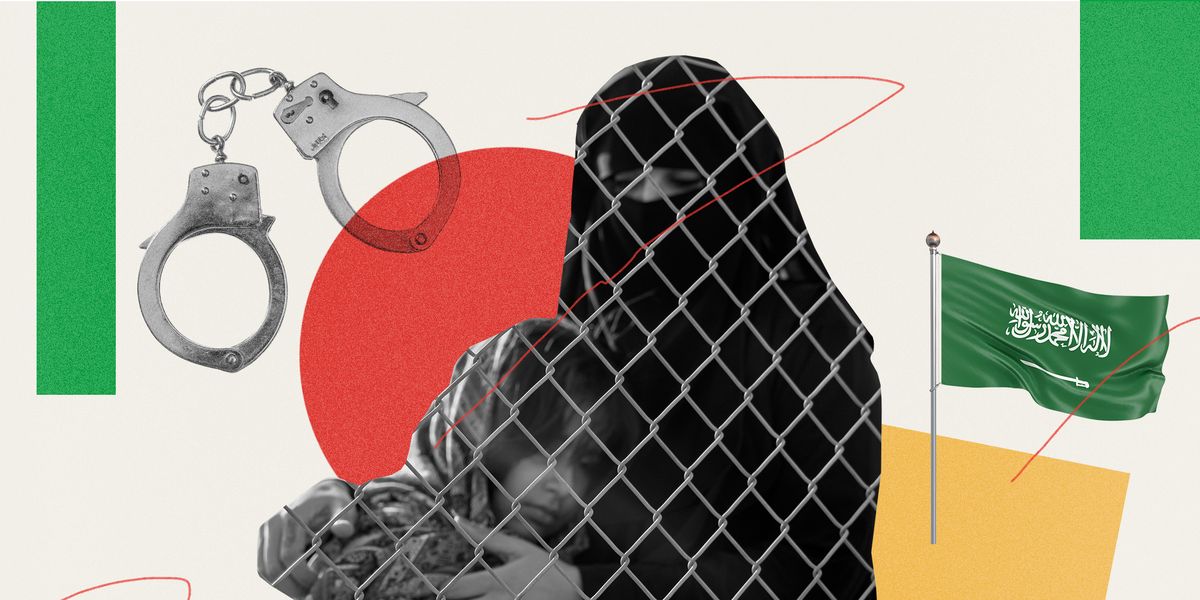
“Every Saudi girl and woman knows about Dar Al Reaya—we are brought up fearing Dar Al Reaya,” says Farida, a former detainee in her twenties, who was sentenced to two years in one of Saudi Arabia’s notorious detention centers for women after she filed a police complaint in February 2019 about physical harassment she was experiencing from a male family member whom she was living with at the time. “I remember growing up, driving past these facilities—big blocks, with shutters down on every window, just down the road from us and the shopping malls—and I would think, Who is inside there now? How many are inside? I never thought I would be one of the girls who ended up there. Never.”
Dar Al Reaya, or “Homes of Care,” are a network of detention facilities whose official purpose is to hold women under the age of 30 who need “social correction,” “strengthening of their religious faith,” or those who are under investigation or trial, according to an official at Saudi Arabia’s Ministry of Human Resources and Social Development, which oversees Dar Al Reaya. But former detainees say they have been sent to the facilities on charges of disobedience or even because of minor disagreements at home. Other women interviewed for this story say they were held in the facilities without being charged.
Farida, whose name has been changed for her protection, is one of the few former detainees to speak out about life inside Dar Al Reaya. Those who are released from Dar Al Reaya say they were pressured into signing pledges to never speak of their detention. Social media accounts describing a myriad of mistreatment and physical abuses in Dar Al Reaya have been suspended and there are no statistics on how many women and children are being held. The homes are in different government buildings and not officially marked, though some are labeled “Social Protection Unit.” Four former detainees I spoke with said they were held in facilities across major cities in the Kingdom including Riyadh, Jeddah, Tabuk, Dammam, and Jazan.
“After I went to the police, desperate for help, they called my abuser … There is no one you can trust.”
Farida was released after 16 months, in mid 2020. She says most of her fellow detainees were being held for reporting abuse to authorities. “After I went to the police, desperate for help, they called my abuser into the police station to sign a pledge, approving my detainment in Dar Al Reaya,” Farida says. “There is no one you can trust.” Women are not permitted to exit Dar Al Reaya without the permission of their guardian, who often is their abuser, at the end of their sentence.
Some centers are even holding children, according to former detainees. One former detainee of a facility in Dammam, who did not wish to share her name for her safety, told me she and her two-year-old-daughter were held together after she reported abuse at home. “My daughter was not given proper meals; she ate only twice daily. She was hit by the staff for crying and made to watch when I received lashes,” the woman says. After more than two months, her abuser permitted her exit and she returned home to him.
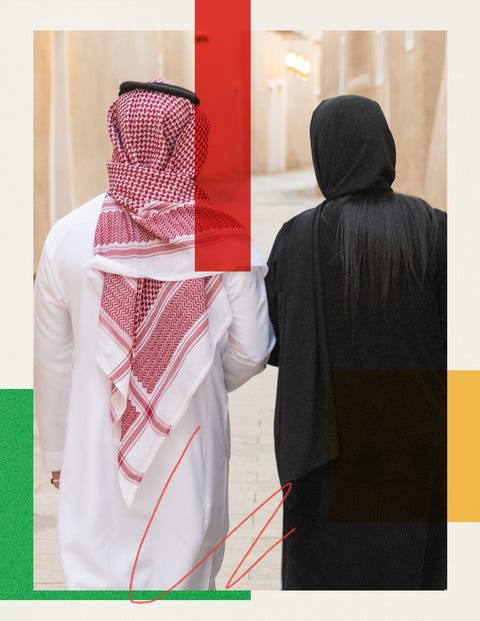
Johnny Greig / Getty Images
Asma, whose name has also been changed for her protection, was sentenced to 20 months after she brought up the subject of inheritance with her male relatives. She remembers being stripped-searched upon arrival. She was given a loose fitting robe with Dar al Reaya stamped on the back. Her makeup and accessories were removed and her physical condition upon arrival was noted, as well as what kind of abaya she was wearing: Was it “decent” covering her head, or “not decent,” aka slung low across her shoulders? She was then handed a pack with two sanitary pads, a toothbrush, small towel, shampoo, and one change of clothes. The induction is conducted by female staff, but otherwise all of the guards and caretakers on the wards are male.
Each woman is put into solitary confinement upon arrival, ostensibly for a few days, but some are left there for up to two months. In solitary confinement “blood tests,” are taken, their purpose not explained to the women. The rooms each have a bed, a Quran, and a toilet—if they’re lucky. The women without toilets have to beg the male staff to let them out to use the restroom; some women report wetting themselves rather than facing the guards.
The women are forbidden from speaking to each other or showing outward signs of happiness. They receive meals twice a day at 6am and 1pm. Both Farida and Asma told me the women are force fed strong sedatives with their breakfast to keep them compliant throughout the day.
When girls arrive at the centers they are told what their punishment will be—typically between 100 and 150 lashes. The lashes are spread out over their time at Dar Al Reaya, allowing women to heal before receiving the next. “Flogging happens at Dar Al Reaya every Thursday,” Asma says. “There are minors inside and pregnant women who are victims of rape and incest and they will receive lashes also.” Additional flogging or solitary confinement for at least 20 days is administered for breaking rules, or talking back to male staff or even asking questions about their charges, says Farida. Each lash is administered between the neck and the lower back, and is observed by an islamic scholar, who ensures the “religiosity” of the violence.
Suicide and incidents of self harm in Dar Al Reaya are common, says Farida. Failed suicide attempts result in solitary confinement and flogging, “which undoubtably harms the girls’ mental health and might further increase suicidal thoughts,” Farida adds.
Another detention facility run by the Social Affairs Ministry called Dar Al Theyafa, or “the Home of Hospitality,” largely acts as a holding center for women whose guardian does not allow her freedom even after her “sentence” at Dar Al Reaya is complete. “Then, the prison has the option to marry her off or keep her imprisoned indefinitely,” Farida explains. “There are women who have been released to male suitors who they have never met before, told that their family have approved the match, and find themselves in an arranged marriage.”
“There is an overwhelming trend of violence, abuse, often from inside the family, manipulation of justice where men face little to no legal consequence—even for murder.”
One former detainee of Dar Al Theyafa, who declined to give her name, says she knew a girl who tried to hang herself with her bra and was caught and punished. “After that, they banned us from wearing bras for a period of time because the law of Dar Al Theyafa is, one individual’s mistake is everybody’s. Some girls have tried to commit suicide by breaking the trash cans to get a sharp edge, so the caretakers took the trash cans away, too.”
 When girls arrive at the detention centers they are told what their punishment will be—typically between 100 and 150 lashes. The lashes are spread out, allowing women to heal before receiving the next.
Getty / Design by Leah Romero
Thirty-four year-old Bethany Alhaidari fled Saudi Arabia for the United States in 2019 to escape abuse from her husband at the time and, in January 2020, filed an emergency case asking the court in Washington state to give her custody of her now six-year-old daughter, which was temporarily granted. Alhaidari now works as the Saudi Officer at the Freedom Initiative, a DC based human rights non-profit organization that works to free political prisoners in the Middle East, and says that the organization has received hundreds of requests to help women in Saudi Arabia, many of whom, she says, fear they will be sent to Dar Al Reaya. “These women are facing discrimination and violence in relation to marriage, divorce and child custody. There is an overwhelming trend of violence, abuse, often from inside the family, manipulation of justice where men face little to no legal consequence—even for murder,” says Alhaidari, “such situations which are more widespread than people realize.”
Saudi Arabia claims it’s modernizing and improving women’s rights. But, Alhaidari says, the reality is that there are no safe spaces for Saudi women to demand basic rights. “Saudi Arabia does not have legal aid for women to turn to when they are fleeing abuse or defending themselves from charges brought by their families or the state,” she says, adding that no independent human rights or women’s rights organizations are permitted to work in the country.
Furthermore, there is no penal code or clarity on what actions are criminal for women. Courts are entitled to their own interpretations of religion, resulting in inconsistencies in sentences. Alhaidari says that in Saudi courts, women’s testimony is not considered equal to men and even when physical evidence of abuse is presented in court, men are often able to simply take an oath to discredit it. The system is set up to fail women, Alhaidari says. “Until the male guardianship system, which renders women as perpetual minors, is abolished, until we see that men who commit violent crimes against female family members are held accountable. Until a woman’s word is considered equal to men’s under the law and in courts, Saudi Arabia isn’t safe for women.”
On International Women’s Day last year, 161 European parliamentarians signed a joint statement calling on Saudi authorities to take swift and strong action to improve women’s rights within the kingdom. “Women are still not able to leave detention centers or state-run shelters without having to seek and receive the consent of their male guardians, who may have previously abused them,” the statement reads. “This can lead to situations of prolonged administrative detention if a male guardian refuses to sign a release form or collect a woman under his guardianship.”
Since that statement was issued not a single Dar Al Reaya facility has been closed. Instead, Alhaidari says, new makeshift facilities are being built to house more detainees. And as long as Dar Al Reaya exists, there will always be a place where Saudi women can be disappeared.
Lynzy Billing Lynzy Billing is an investigative journalist and photographer based between Afghanistan and Iraq.
Read The Full Article Here





:quality(85):upscale()/2024/05/08/709/n/1922564/397076cb663ba20b427918.77377339_.jpg "Beyoncé Concert Outfit Ideas For the “Cowboy Carter” Tour")